The Changing Lanes

About This Course

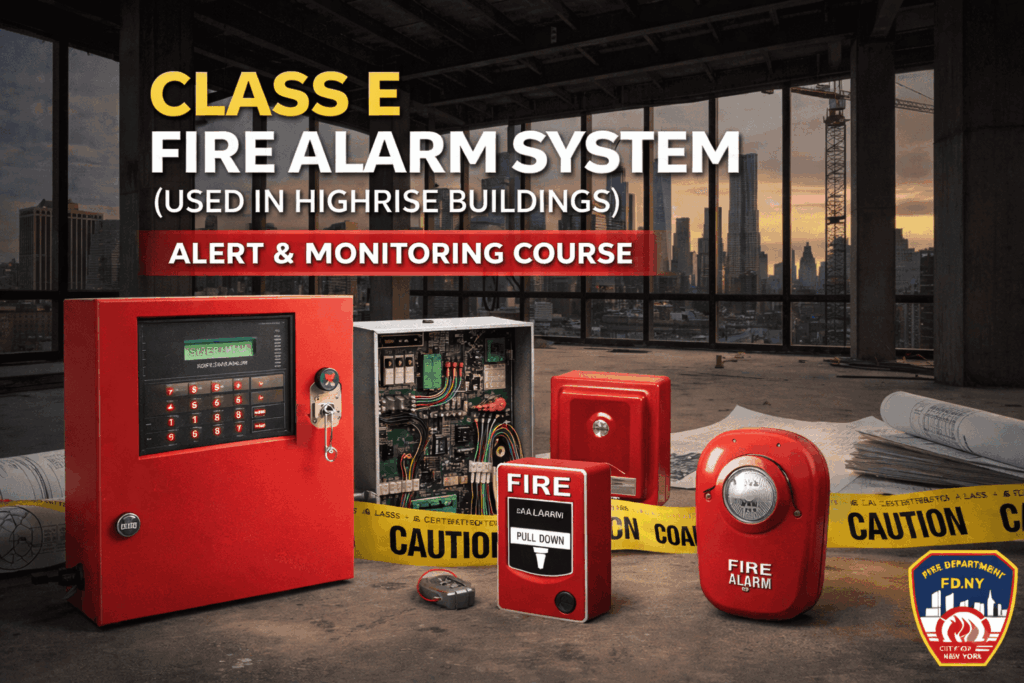
Here’s a real-world NYC Class E fire alarm system breakdown — what it looks like, the components, and how often each part is inspected/tested.

*NOTE the S95 Study Material is for you to take a test at the fire department which is $25. Payment must be made to FDNY directly.


🔥 What is a Class “E” Fire Alarm System (NYC)

A Class E system is the most advanced type used in high-rise office buildings in New York City.

👉 It includes:

  • Automatic detection
  • Manual pull stations
  • Voice evacuation system (NOT just bells)
  • Integration with elevators, HVAC, sprinklers

Think: high-rise commercial building with speakers giving instructions like “please proceed to the nearest exit.”


🧯 Class E Fire Alarm System – Main Components

1. Fire Alarm Control Panel (FACP)

  • The “brain” of the system
  • Shows alarms, troubles, supervisory signals
  • Usually located in lobby or fire command center

2. Initiating Devices (detect fire)

Smoke Detectors

  • Found in ceilings, ducts, rooms
  • Detect smoke particles

Heat Detectors

  • Activate when temperature rises

Manual Pull Stations

  • Red boxes on walls (NYC has white diagonal stripe for central station systems)

3. Notification Appliances (alert occupants)

Horn/Strobes

  • Flashing lights + loud horns

Speakers (Voice Evacuation)

  • Key feature of Class E
  • Gives live or prerecorded instructions

4. Supervisory Devices

  • Monitor system conditions (not fire)
  • Examples:
    • Sprinkler valve tamper switches
    • Waterflow switches

5. Power Supply

  • Primary power (building electric)
  • Backup batteries

6. Auxiliary Functions (NYC-specific integration)

Class E systems connect to:

  • Elevators (recall to lobby)
  • HVAC shutdown
  • Smoke control systems
  • Fire command station panel

🖼️ What It Looks Like (Typical Layout)

Here’s how these systems appear in real buildings:

  • Control panel room (fire command center)
  • Ceiling-mounted detectors
  • Wall-mounted pull stations
  • Speaker/strobes throughout floors

(If you want, I can show real labeled NYC photos like I did before.)


📋 NYC Inspection & Testing Frequency (Based on FDNY + NFPA 72)

In NYC, inspections follow FDNY + NFPA 72 code.

🔍 Daily / Weekly

  • Control panel check (system normal, no trouble signals)

🗓️ Monthly

  • Batteries (visual condition, corrosion)
  • Some supervisory signals (depending on system)

📅 Semi-Annual (Every 6 Months)

  • Smoke detectors (functional check)
  • Heat detectors
  • Duct detectors

📆 Annual (MOST IMPORTANT)

  • Full system test required in NYC
  • Includes:
    • All devices (pulls, detectors, strobes, speakers)
    • Voice evacuation system
    • Elevator recall
    • HVAC shutdown

👉 Must be done with:

  • Fire alarm company
  • Licensed electrician
  • FDNY coordination

⏳ Multi-Year Testing

  • 3, 5, 6, 12-year tests depending on component type

🧠 Real-World NYC Insight (Important)

  • Class E systems require a Fire Safety Director (FSD) on-site
  • Inspections are often tied to:
    • FDNY inspections
    • DOB compliance
  • Records must be kept at least 3 years

💼 How to Talk About This (Resume Angle)

You can describe it like this:

“Familiar with Class E fire alarm systems in NYC, including inspection, testing, and maintenance of initiating devices, notification appliances, voice evacuation systems, and integration with life safety systems per FDNY and NFPA 72 requirements.”


If you want, I can:
✅ Show real labeled photos of each component (NYC style)
✅ Break down exact FDNY inspection checklist used in the field
✅ Or quiz you so you can sound like a pro in interviews

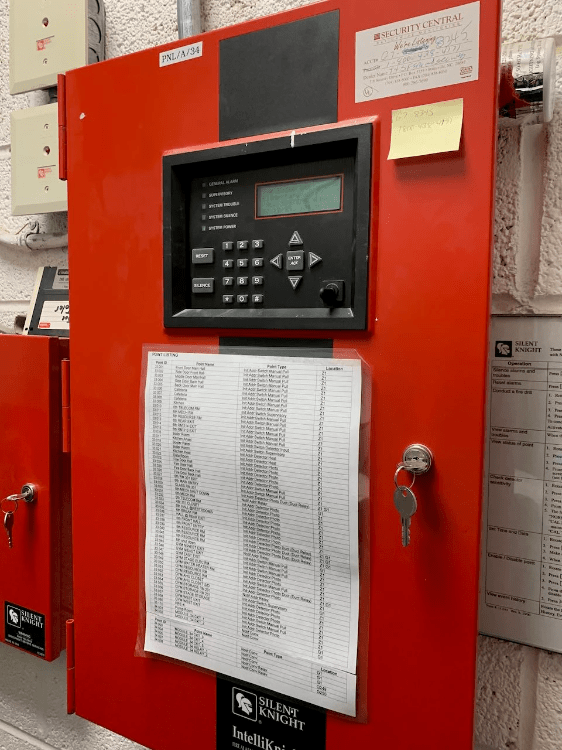
✅ Show real labeled photos of each component (NYC style)

Here are real, field-style photos of Class E fire alarm system components like you’d see in NYC high-rise buildings—labeled so you can recognize them during inspections.


🔴 1. Fire Alarm Control Panel (FACP)

https://custom-images.strikinglycdn.com/res/hrscywv4p/image/upload/c_limit%2Cfl_lossy%2Ch_9000%2Cw_1200%2Cf_auto%2Cq_auto/6729436/346770_71448.png
https://blog.koorsen.com/hs-fs/hubfs/Blogs/Products%20and%20Services/Fire%20Alarm/Fire%20Alarm%20Tech%20Inspection/IMG_9806.jpg?name=IMG_9806.jpg&width=1200

What you’re looking at:

  • Red cabinet (FDNY standard look)
  • Digital display + buttons (acknowledge, silence, reset)
  • Usually in lobby or fire command center

Inspector checks:

  • System normal (no trouble signals)
  • Panel accessibility
  • Logs and annunciation working

👉 This is the “brain” of the system that monitors all devices and triggers alarms


🚨 2. Smoke Detectors (Ceiling Mounted)

(Representative example — same style used widely)

What they look like:

  • Round, white, ceiling-mounted
  • Small vents around edges

Inspector checks:

  • Proper placement (not blocked)
  • Functional test (smoke test)
  • Cleanliness (dust = violation risk)

🌡️ 3. Heat Detectors

(Often similar to smoke detectors but labeled differently)

What they look like:

  • Ceiling-mounted
  • Sometimes slightly thicker or with markings

Inspector checks:

  • Heat activation test
  • Location (boiler rooms, kitchens)

🟥 4. Manual Pull Stations (NYC Style)

(Typical red station style)

What they look like:

  • Red box on wall near exits
  • Often says “PULL DOWN”
  • NYC central station systems may have a white stripe

Inspector checks:

  • Installed at exits
  • Activation test (must trigger alarm at panel)

🔊 5. Horn/Strobes (Notification Devices)

What they look like:

  • White rectangular box
  • Clear strobe light + horn

Inspector checks:

  • Audible level
  • Strobe visibility
  • Sync across floor

🔈 6. Voice Evacuation Speakers (Class E Feature)

(Critical difference from simpler systems)

What they look like:

  • Round or rectangular ceiling speakers
  • Sometimes combined with strobes

What they do:

  • Play messages like:
    • “Fire emergency, proceed to nearest exit”

Inspector checks:

  • Audio clarity
  • Message playback
  • Live microphone function

💧 7. Supervisory Devices (Sprinkler System)

Examples:

  • Waterflow switch
  • Valve tamper switch

What they look like:

  • Mounted on sprinkler piping
  • Wired back to panel

Inspector checks:

  • Signal shows as “supervisory” (not alarm)
  • Proper response at panel

🔋 8. Batteries (Backup Power)

What they look like:

  • Inside control panel cabinet
  • Large sealed batteries

Inspector checks:

  • Voltage
  • Corrosion
  • Load test

🧠 How It All Connects (NYC Reality)

In a Class E system:

  • Devices → send signals → FACP
  • FACP → activates:
    • Speakers
    • Horn/strobes
    • Elevators recall
    • HVAC shutdown

This integration is required in NYC high-rise buildings


🏙️ Real NYC Inspection Tip (What FDNY Looks For)

When inspectors show up, they typically:

  • Trip a pull station
  • Check panel response
  • Walk floors for:
    • Audible/visible alarms
    • Speaker announcements
  • Verify elevator recall + HVAC shutdown


Fire safety devices | Fire alarm systems

Course Curriculum

Class E Fire Alarm System PDF Lesson
Fire Alarm System Components PDF Lesson
FDNY S-95 Study Material PDF Lesson
Class E Fire Alarm Additional Information PDF Lesson
Full Course Video VIDEO Lesson
Final Certification ExamAssessment
$19.99 One-time payment
  • Self-Paced Learning
  • Full Lifetime Access
  • Access on Mobile
  • Certificate of Completion
×

Join Course